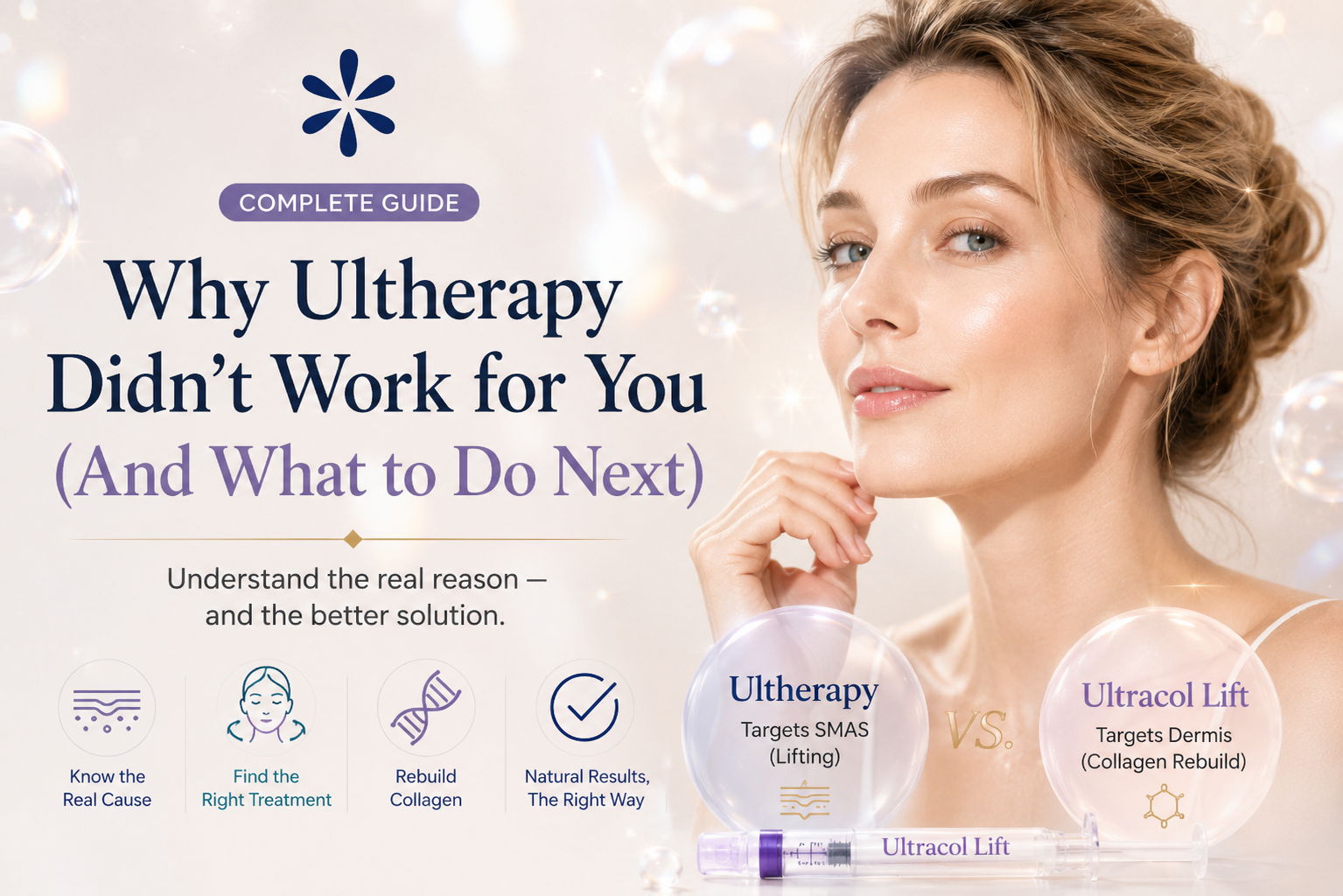
You've done enough research to know that fillers add volume and Ultherapy tightens. But somewhere between those two options, there's a category most people outside Korea haven't fully discovered yet.
Collagen boosters don't add anything from the outside. They rebuild from within.
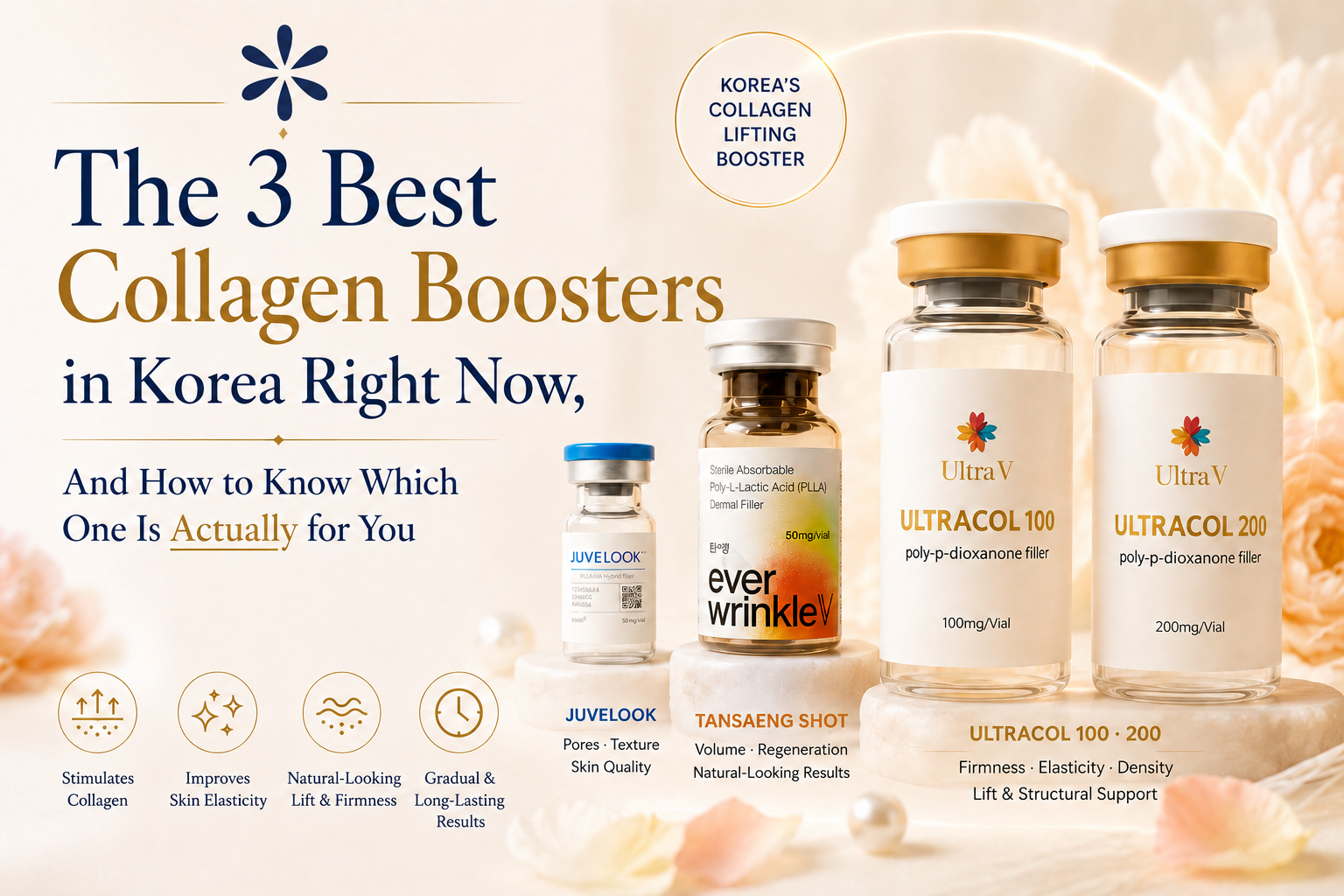
And right now, three treatments are leading that category at Ireraum Clinic Gangnam: Juvelook, the Tansaeng Shot, and Ultracol 100/200. They share the same general goal — stimulating your skin's own collagen production — but they work differently, target different concerns, and suit different skin profiles.
This guide breaks down exactly what separates them.
What Is a Collagen Booster — and Why Does It Work Differently?
What Is a Collagen Booster?
A collagen booster is an injectable treatment that stimulates fibroblasts — the cells that produce collagen and elastin in the skin.
Instead of adding volume from the outside, it encourages your skin to rebuild its own support structure from within.
As collagen production gradually declines with age, you may start to notice:
- Sagging around the jawline and cheeks
- Enlarged pores
- Fine lines and creases
- Reduced elasticity and firmness
Different treatments address this process in different ways:
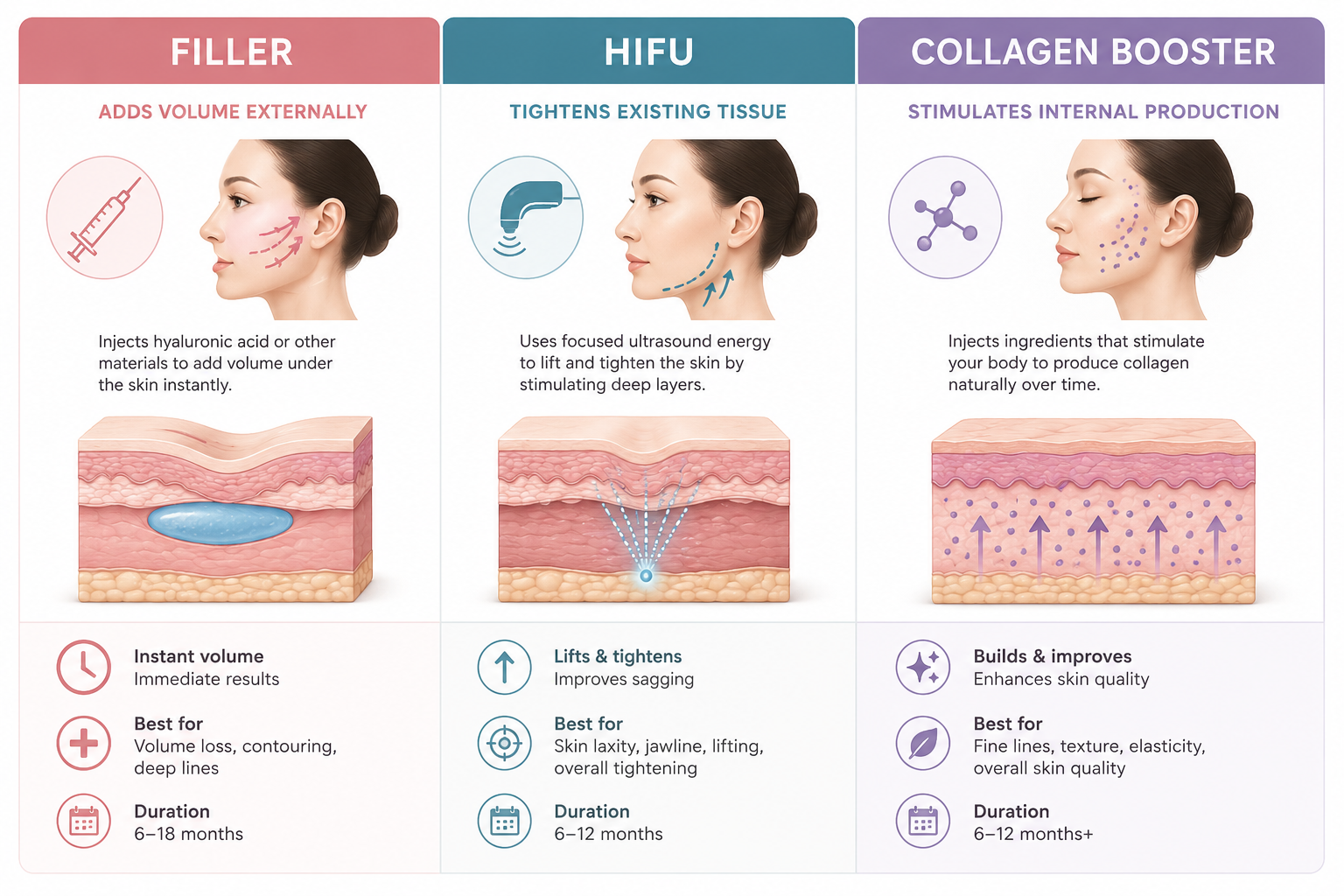
Filler → Adds volume externally
HIFU → Tightens existing tissue
Collagen Booster → Stimulates new collagen production
Collagen boosters take longer to show results than fillers or lifting treatments. However, the improvements are often more natural-looking, more comprehensive, and longer-lasting because they work with your skin's own regenerative process.
1. Juvelook — For Pores, Texture, and Skin Quality
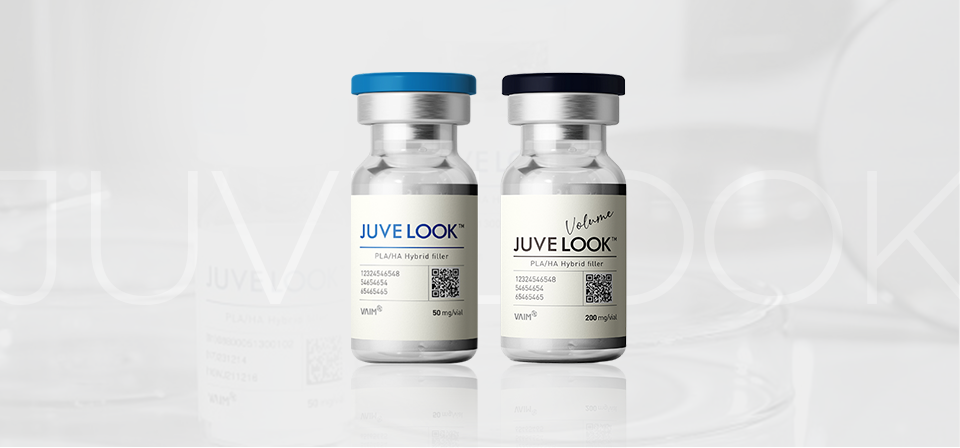
Juvelook's primary active ingredient is PDLLA (Poly-D,L-Lactic Acid) — a bioresorbable polymer that works by creating a mild tissue response in the dermis, prompting the skin to produce new collagen around the treatment area.
What makes Juvelook distinct is where that collagen production shows up most visibly: in skin texture and pore size.
As the skin's underlying structure strengthens, pores tighten naturally. Surface texture becomes smoother and more even. The overall complexion reads as more refined — without looking treated.
Best for:
- Visible or enlarged pores
- Uneven skin texture
- Dull, tired-looking skin
- Gradual, natural-looking skin quality improvement
What to expect:
Results build over 4–8 weeks. Multiple sessions are typically recommended for optimal pore and texture improvement.
Consider if: Your main frustration is skin quality — not lifting, not volume, but the overall condition and refinement of the surface.
2. Tansaeng Shot (Newborn Glow Shot) — For Skin Regeneration and Natural Volume
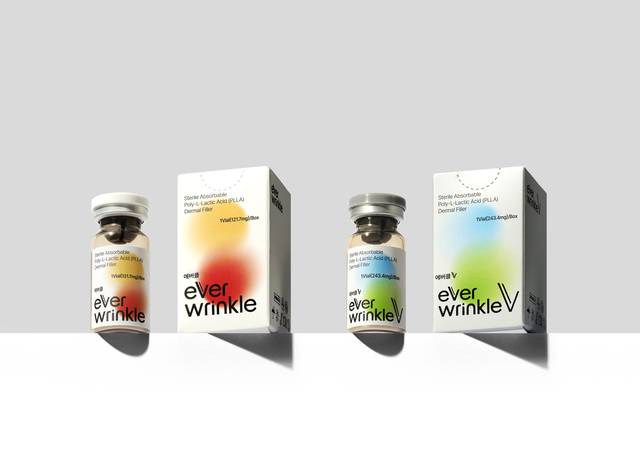
The Tansaeng Shot combines PDRN and PLLA — two ingredients that work through completely different mechanisms, which is precisely what makes the combination effective.
PDRN (Polydeoxyribonucleotide) sends a biochemical repair signal to fibroblasts, stimulating collagen and elastin production while simultaneously calming inflammation. PLLA works physically — its microparticles prompt the body to build a collagen matrix around them as they gradually absorb.
Together, they address skin regeneration and structural collagen support at the same time.
Best for:
- Nasolabial folds and cheek volume loss
- Skin that has lost bounce and resilience
- Patients who want skin regeneration alongside structural improvement
- Natural-looking rejuvenation without dramatic change
What to expect:
Changes become visible around 3–4 weeks after the first session, with cumulative improvement across a series of treatments.
Consider if: You're noticing that your face looks less full and less resilient — not just less firm. The Tansaeng Shot addresses the quality of what's there, not just the position.
3. Ultracol 100/200 — For Firmness, Elasticity, and Collagen Density
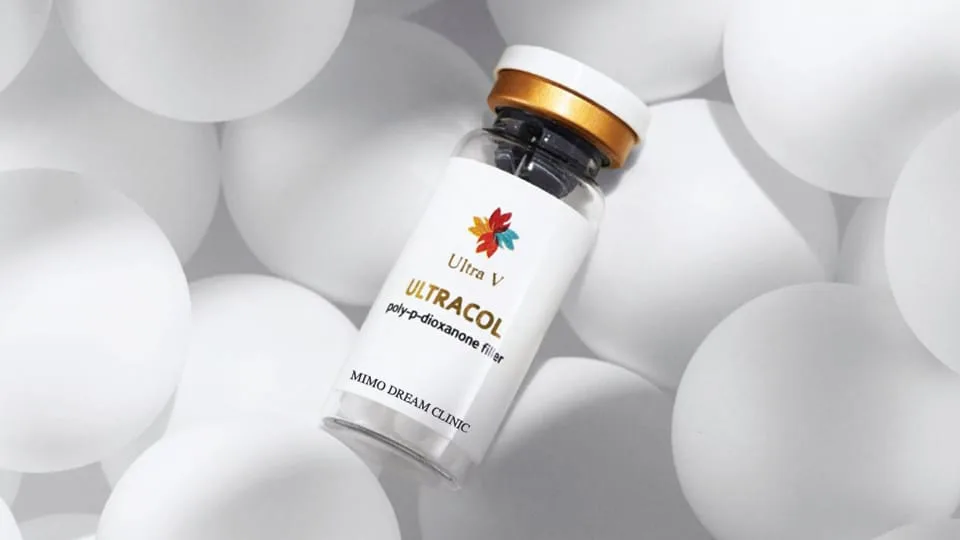
Ultracol 100/200 uses PDO (Polydioxanone) as its primary active ingredient — a material with a well-established safety profile in medicine, used for decades in dissolvable sutures before its application in aesthetic collagen stimulation.
When injected as fine microparticles, PDO stimulates the surrounding tissue to produce new collagen as it gradually dissolves. The result is a measurable increase in skin density and elasticity — the kind of structural improvement that makes the face look more defined and resilient without adding volume or changing contours.
Best for:
- Loss of firmness and skin elasticity
- Patients who want anti-aging care that works proactively
- Those who prioritize collagen density over volume or texture
- Patients considering Ultherapy who also want dermal-level support
What to expect:
Results build gradually over 6–12 weeks. Ultracol 100/200 is often used alongside lifting treatments like Ultherapy for a two-layer approach — one targeting the SMAS, the other rebuilding the dermal layer above it.
Consider if: Firmness and elasticity are your primary concerns — and you want a treatment that addresses collagen density rather than just tightening what's already there.
Side-by-Side: How to Choose
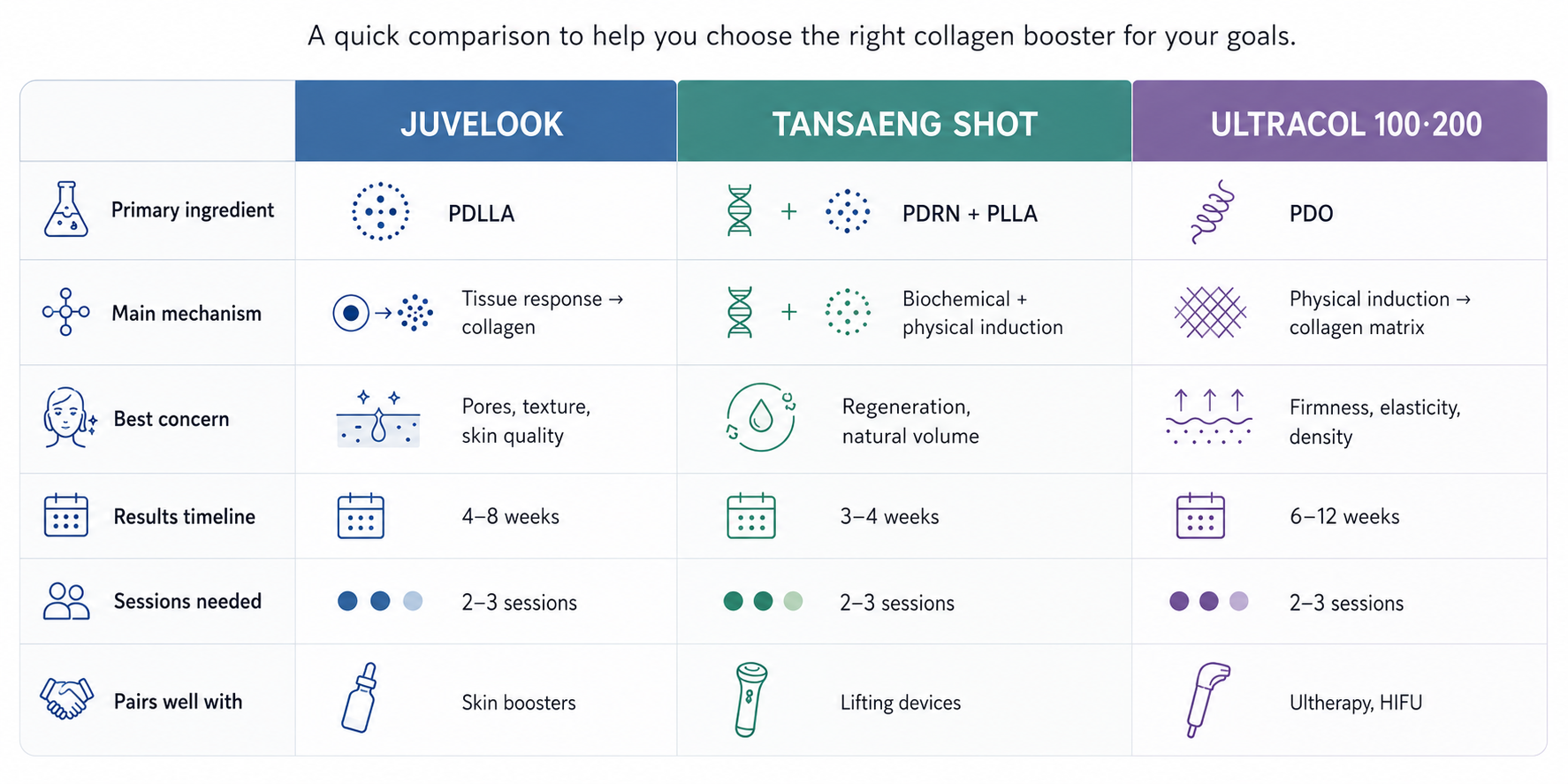
There is no single "best" collagen booster.
Juvelook focuses on skin texture, Tansaeng Shot on regeneration and natural volume, and Ultracol 100·200 on firmness and elasticity. The ideal choice depends on your skin condition and treatment goals.
The Clearest Way to Think About It
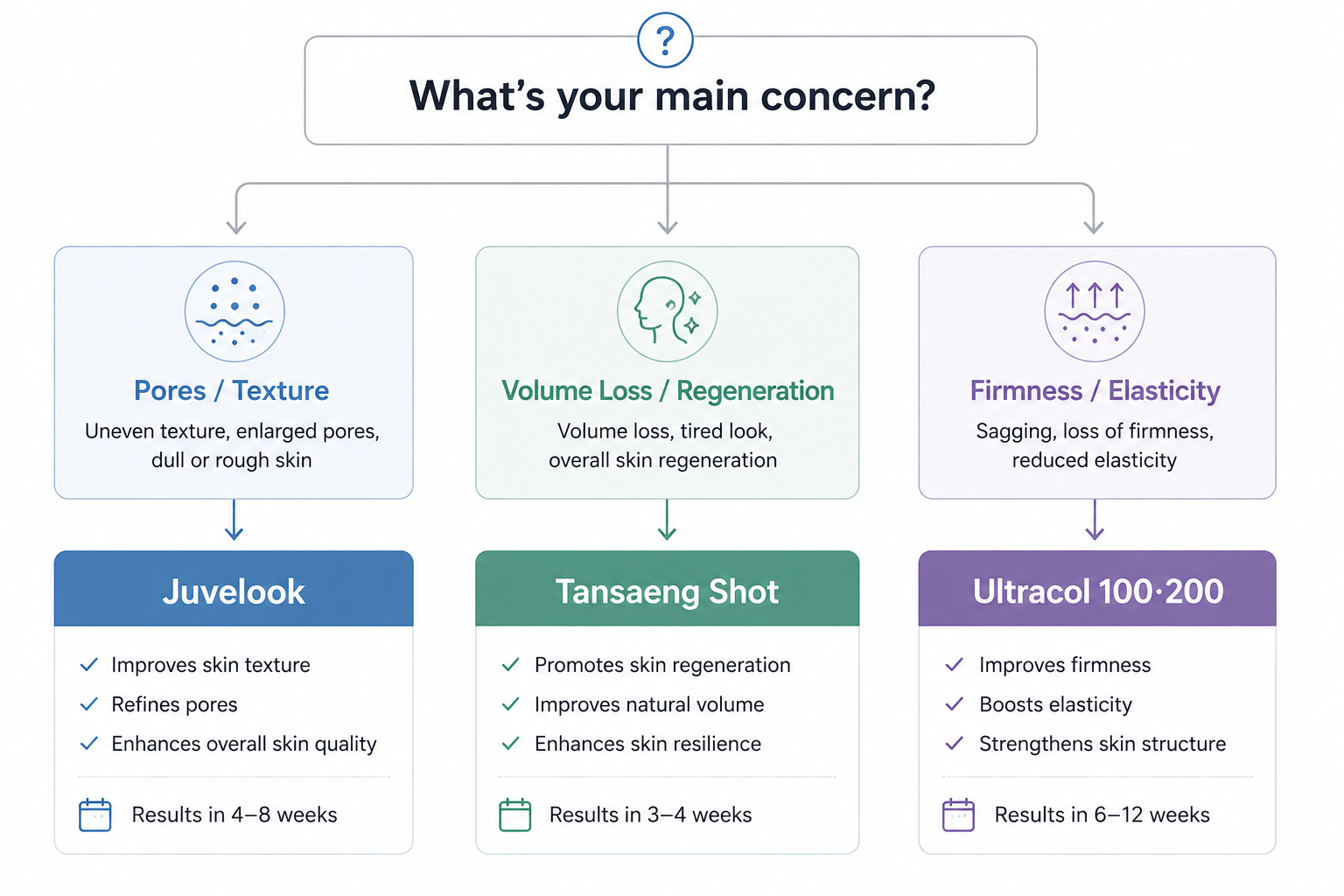
Pores and texture are bothering you most → Juvelook
Your face looks less full and less alive than it used to → Tansaeng Shot
Firmness and elasticity are what you've lost → Ultracol 100/200
You're not sure — or you have multiple concerns → This is exactly what the consultation is for. Most patients benefit from a combination, and the right sequence matters.
Why the Same Treatment Doesn't Work for Everyone
The most common mistake in collagen booster selection isn't choosing the wrong product. It's assuming the concern is simpler than it actually is.
"Sagging" can mean skin laxity. It can mean fat descent. It can mean collagen loss. It can mean all three — in different proportions, in different parts of the face.
A treatment plan that addresses one of those won't fully resolve the others. This is why at Ireraum Clinic, the consultation focuses on diagnosing the cause before recommending the treatment — not the other way around.
Frequently Asked Questions
Q. Are collagen boosters painful?
A. Numbing cream is applied before treatment. Some sensation at the injection sites is normal — most patients find it very manageable. The level of discomfort varies by treatment and individual sensitivity.
Q. How much downtime should I expect?
A. Mild redness, swelling, and occasional bruising are normal for all three treatments and typically resolve within a few days to a week. We recommend avoiding major events for the first 7–10 days post-treatment.
Q. How many sessions do I need?
A. This depends on your skin's current condition and your goals. A single session can produce visible improvement, but a course of 3 sessions spaced 4 weeks apart is typically recommended for meaningful, lasting results. Your director will advise based on your individual skin — not a fixed package.
Q. How do collagen boosters compare to HIFU?
A. Different tools for different problems. HIFU tightens existing tissue from the SMAS layer up. Collagen boosters rebuild the skin's internal structure at the dermal level. For patients with both concerns, combining the two addresses different layers of the same problem simultaneously.
Q. Can these treatments be combined with each other?
A. Yes. Combination protocols are common at Ireraum Clinic. The right combination — and the right sequence — is determined in consultation based on your skin's specific needs.
Q. Are these treatments available for international patients?
A. Yes. Ireraum Clinic Gangnam offers English consultations and works with international patients regularly. An online photo consultation is available before you travel to Seoul.
The Bottom Line
Collagen boosters aren't a category — they're a decision. And the decision starts with understanding what your skin has actually lost.
Pores and texture → Juvelook.
Resilience and natural volume → Tansaeng Shot.
Firmness and density → Ultracol 100/200.
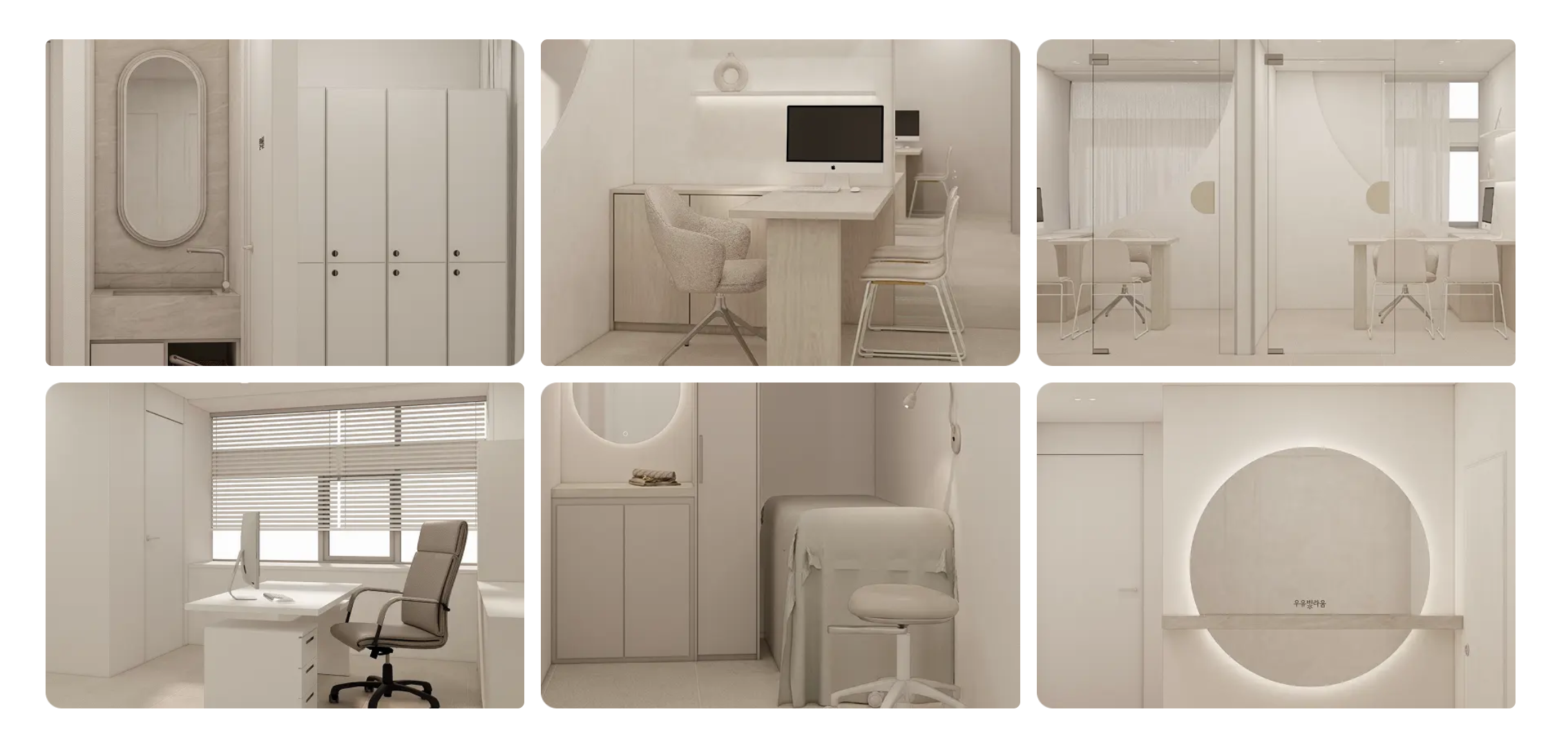
All three are available at Ireraum Clinic Gangnam. The right one for you starts with a conversation.
Book a consultation at IRERAUM Clinic Gangnam today.